Quick Answer
Septic tank pumping in Ocala typically runs $300-$500 for tanks up to about 1,000 gallons, with local extremes of $190-$800 depending on tank size, access, and digging. Florida DOH recommends pumping every 3-5 years. A proper pump-out empties both compartments, cleans the outlet filter, and ends with a written condition report and photos.
The price, in writing, before the truck rolls
Go look at every septic site in Marion County. Not one publishes a price. That's how the classic scam works: a friendly number on the phone, then it doubles once the lid is off. We'd rather show you the local market data up front.
| Service | Typical Ocala-area range |
|---|---|
| Septic tank pump-out (up to ~1,000 gal) | $300-$500 (extremes $190-$800) |
| Pump-out + inspection (real estate) | $400-$800 |
| Septic inspection only | $250-$500 |
What moves the number: tank size, how deep the lid is buried, and how far the truck can get from the tank. A 1,500-gallon farm tank with a lid under 18 inches of sod costs more than a 900-gallon tank with a riser at grade. These are typical Ocala-area ranges from local cost data, never a quote. Call for exact pricing on your tank.
How often? Florida says 3-5 years
Florida DOH maintenance guidance is every 3-5 years for a typical household. Skew earlier if you have five people in a three-bedroom house, run a garbage disposal, or host the whole family every weekend. Skew later if it's two retirees who summer up north. Marion County has roughly 90,000 homes on septic, and the expensive failures we see mostly trace back to tanks that went 8-10 years between pump-outs, letting solids wash into the drain field.
What a proper pump-out includes (and what a cheap one skips)
A $190 "special" that vacuums the first compartment through a 6-inch hole and drives off is not a pump-out. Ours includes:
- Both compartments emptied. Most Florida tanks are two-chamber, and the second chamber holds solids too. Skipping it leaves a third of the job in the ground.
- Outlet filter pulled and cleaned. A clogged effluent filter mimics a failing drain field; cleaning it is a five-minute job that saves people thousands in misdiagnosed repairs.
- Condition report with photos of your open tank: baffle condition, liquid levels, sludge depth, any cracks or root intrusion. You see what we see. If someone later claims your tank is "shot," you'll have dated photos that say otherwise.
If we spot a cracked lid or a rotted baffle, that's a tank repair conversation with its own written estimate, never a surprise line item on the pumping invoice.
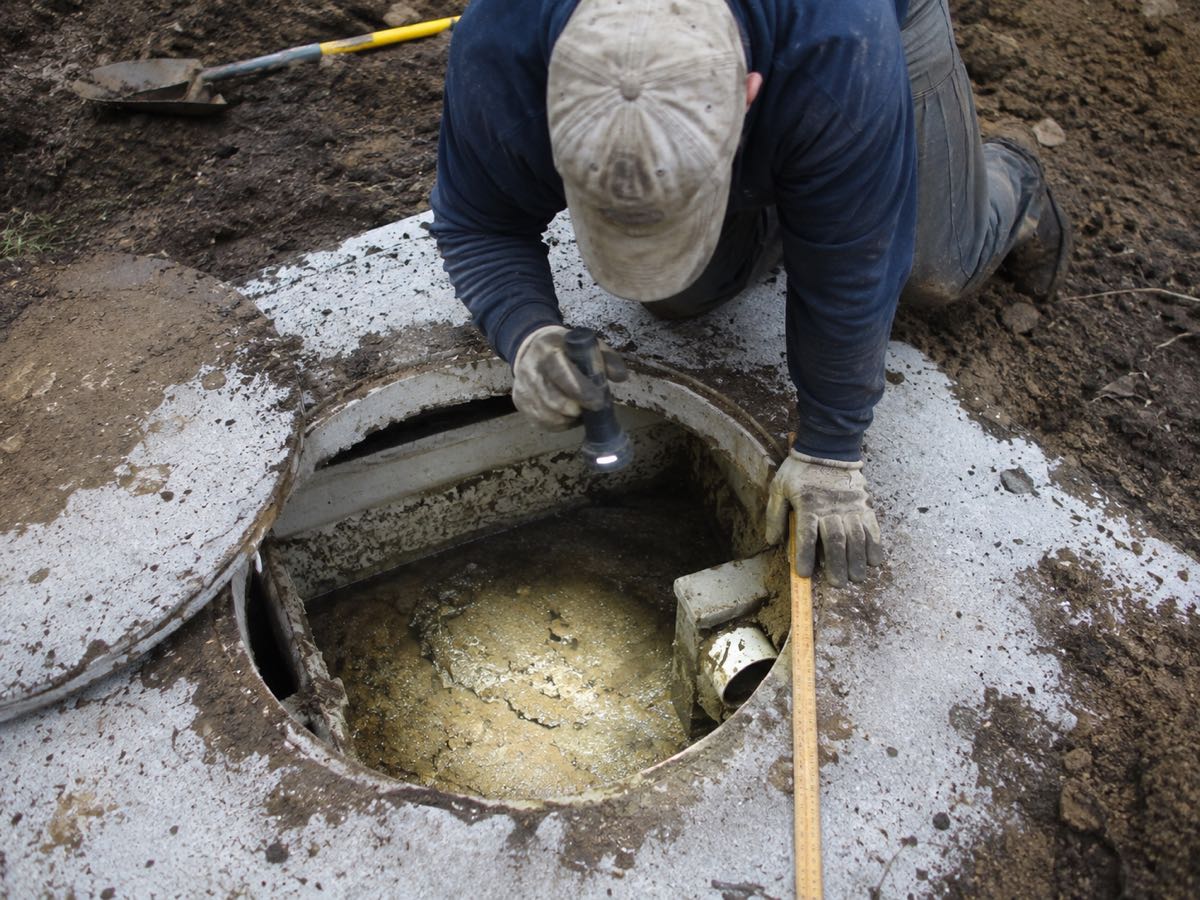
Pumping will not fix a failed drain field. Full stop.
The most common Ocala septic complaint: "everything backed up again a week after they pumped it." Pumping empties the tank. If the drain field soil is clogged with biomat or saturated from June-September rains, the tank refills in days and the symptoms return. Selling repeat pump-outs to a house with a dead field is a $400-a-month subscription to someone else's problem. If your backups came back within days of a pump-out, read our drain field repair page. Restoration starts around $2,000, and catching it early is the difference between that and $15,000.
Never pump during a flood
If your yard is underwater after a tropical system, do not let anyone pump your tank. UF/IFAS hurricane guidance is blunt about this. An empty tank in saturated ground floats like a boat hull and can heave right out of the yard, shearing off both pipes. Wait for the water table to drop. Our emergency page covers the full storm protocol, including what to do when the alarm sounds mid-outage.
Garbage disposals and Ocala's sandy soil
Disposals grind food into particles the tank never fully settles out. In slow, heavy soils that's a nuisance; in Marion County's fast-draining sand it's a drain field killer, because effluent moves through quickly and carries fines with it. If you use a disposal daily, plan on pumping every 2-3 years instead of 3-5, or compost the scraps and keep the longer schedule.
Horse farms and large tanks on the NW corridor
The estates along US 27 and SR 40 northwest of Ocala run bigger systems than a subdivision lot: 1,500-gallon-plus tanks, multiple tanks per property, barn apartments and staff quarters on their own systems, sometimes decades old. Bigger tanks mean bigger pump-out volumes and higher costs at the top of the range, and older large-capacity systems reward a real condition report over a vacuum-and-run. We pump them all, and we'll map what's actually buried out there while we're at it.