Quick Answer
Drain field restoration (aeration/soil fracturing) typically costs $2,000-$5,000 in the Ocala area; repair or replacement runs $2,000-$15,000 depending on severity and water table. Pumping the tank will not fix a failed field. If backups return within days of a pump-out, the field is the problem. Repairs require an FDEP permit (the program left the county health department on July 1, 2025), and we handle that paperwork.
Signs your drain field is failing, and what they mean here
| Sign | What it usually means | Ocala-specific note |
|---|---|---|
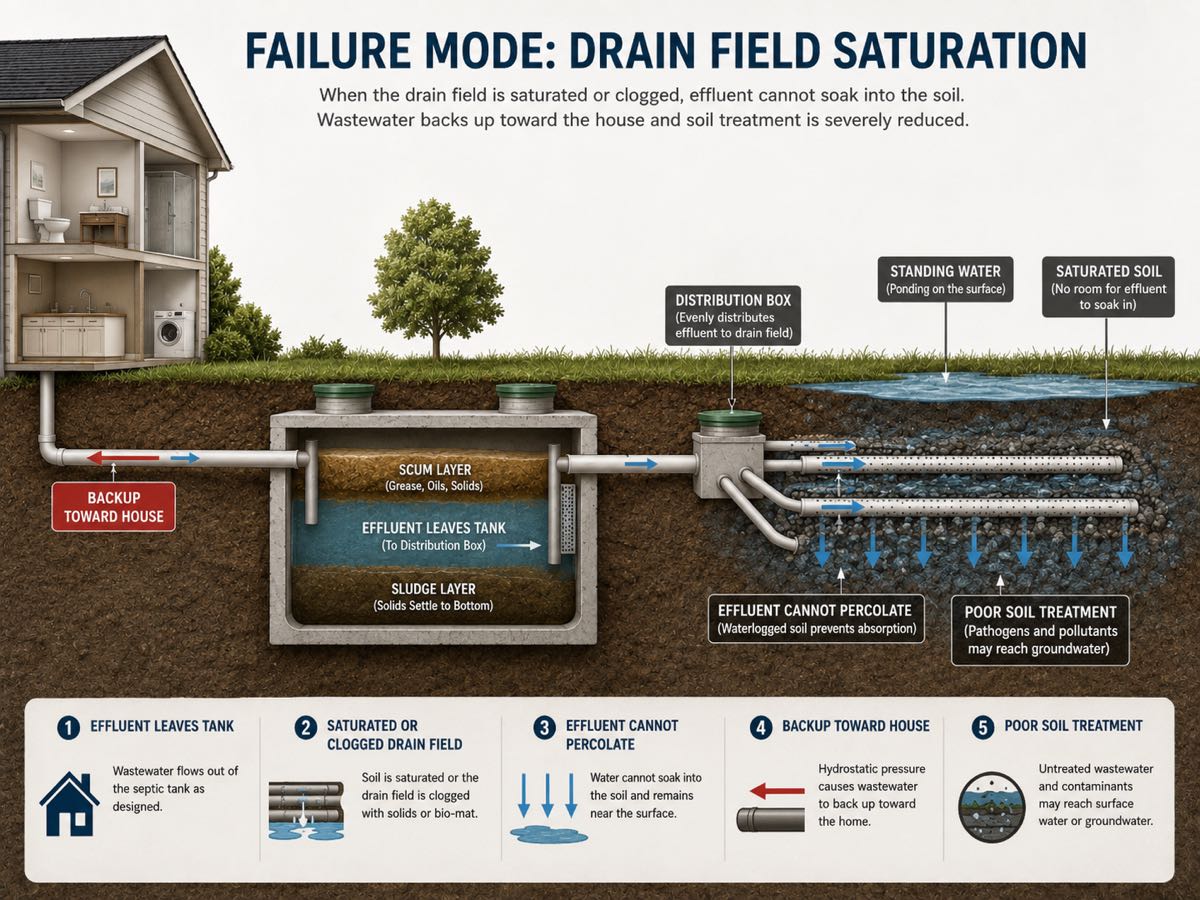
| Backups during/after heavy rain | Saturated drain field soil | June-September rainy season; seasonal high water table in east-county low areas |
| Persistent soggy area or standing water over the field | Biomat clogging / hydraulic failure | Our sandy soil normally drains fast; standing water here is a strong failure signal |
| Lush green stripe over the lateral lines | Effluent surfacing and acting as fertilizer | That surfacing effluent is also a nitrogen discharge, the exact problem the Silver Springs BMAP targets |
| Rotten-egg odor near tank or field | Gas escaping; possible surfacing effluent | Worse when the water table rises after storms. See our sewage smell in yard page for the other causes it could be. |
| Gurgling fixtures, slow drains house-wide | Tank full or outlet/field restricted | Rule out a simple outlet-filter clog before approving big repairs |
| Backups return within days of pumping | Drain field failure, not the tank | Pumping is not a field fix; see below |
| Alarm activations getting more frequent | Pump wear, float issues, or infiltration | Common after summer storms and power outages |
| High nitrates in your well test | System discharging to groundwater | Karst limestone under Marion County is a fast path from your field to your own well |
Why pumping won't fix a failed field
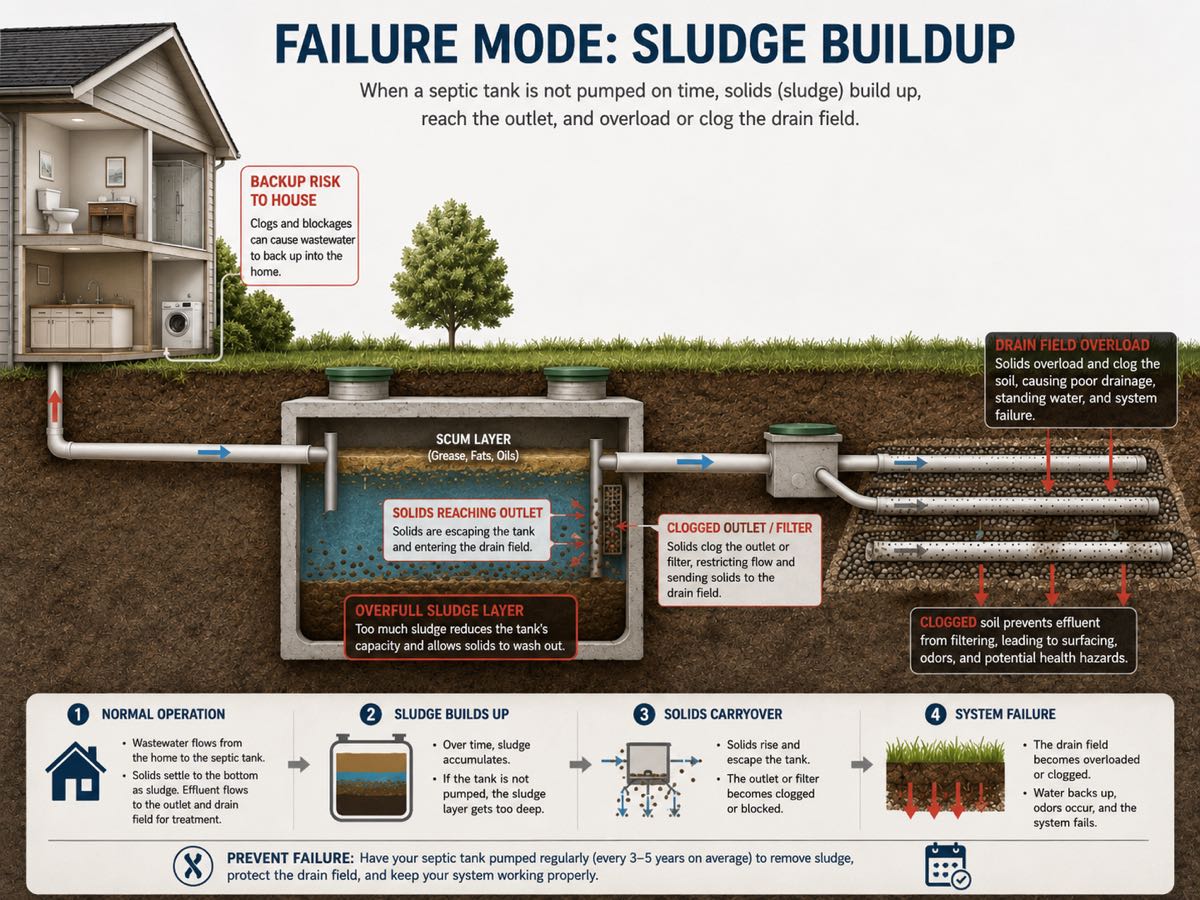
This is the most expensive misunderstanding in the business. Pumping empties the tank, nothing more. If the field's soil is clogged with biomat or sitting saturated, the tank refills in days and every symptom comes back. Homeowners tell us the same story: "everything backed up again a week after they pumped it." That's not a bad pump-out; that's a field problem wearing a tank costume. Routine pumping every 3-5 years prevents field failure by keeping solids out of the laterals. It doesn't reverse one.
Restoration vs. replacement: the $2,000 question (or the $15,000 one)
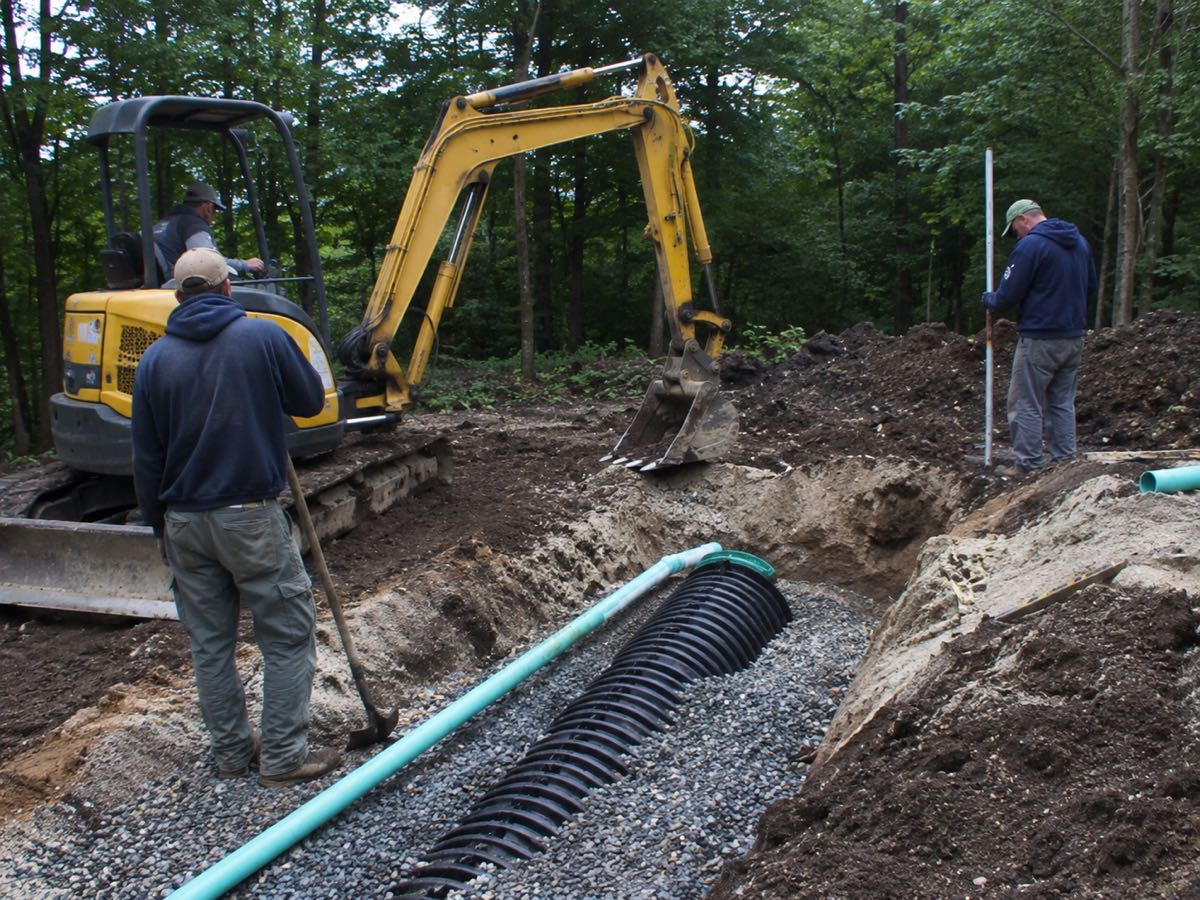
Restoration: $2,000-$5,000 typical. When the pipes and gravel are intact but the biomat has sealed the soil, mechanical aeration or soil fracturing (Terralift-type equipment) can crack the clogged layer open and buy the field years of life. Best case: a field that struggles in the rainy season but works when it's dry.
Repair or replacement: $2,000-$15,000 typical. Crushed laterals (parking a truck over the field does this), a field chronically below the water table, or a biomat too far gone. Sometimes we replace half a field; sometimes it all goes. The tank often stays. A sound tank with a dead field needs a field, not a whole system.
Two Ocala-specific complications shape the price. First, where limestone sits shallow or discontinuous, FDEP applies a specific drain field-sizing policy for areas of discontinuous limestone. The field may need to be larger, mounded on imported fill, or engineered so effluent gets real soil treatment before it reaches the rock. Second, the seasonal high water table: Florida guidance calls for roughly 24 inches of unsaturated soil beneath the field, and a lot that passes in April can fail that test in September. Call for exact pricing once we've seen your parcel.
Mound systems for lakefront and low-lying lots
Around Lake Weir (Ocklawaha, Weirsdale) and in the flatwoods out toward Fort McCoy and Orange Springs, the water table sits too high for a conventional in-ground field. The fix is a mound system: the drain field is built up in engineered sand above natural grade, buying the required unsaturated depth. Mound and aerobic systems typically run $10,000-$20,000 installed, which stings, but on a lakefront parcel it's often the only design FDEP will permit. If your current field drowns every summer, a mound conversion may be the repair that finally sticks.
That green stripe is also a pollution problem
Surfacing effluent isn't just gross. It's nitrogen headed for the springs. Septic systems account for roughly 29-33% of the nitrogen load in the Silver Springs basin, which is why the BMAP exists and why repair permits can now incorporate its requirements. Marion County has about 90,000 homes on septic; outside the small ARPA-funded sewer-conversion phases in Silver Springs Shores, sewer isn't coming to most of them any time soon. Fixing a failed field is the realistic option, and in karst terrain, it's also the thing standing between your drain field and the aquifer everyone's well draws from.
The kitchen-table promise
- A written diagnosis. Not a verbal "it's bad." What failed, where, and why, on paper.
- Photos of your own open tank. If anyone says the tank is shot but won't show you, that is a red flag. Homeowners report a second company pumping the "shot" tank and it running fine for years.
- A price that survives the drive. A phone quote that doubles once the tank is open is the classic bait-and-switch. Ranges can shift when digging reveals surprises, but a doubling should come with photos and a written explanation.
- No pressure to sign today. A real failure is documented and stays failed tomorrow.
One more check you should run on anybody, including us: Florida requires septic contractors to be registered with the state. Ask for the registration when you get a quote. A legitimate outfit expects the question.
Heavy rain is the most common trigger we see. For what that looked like locally, see what Hurricane Irma did to Ocala septic systems and why the failures showed up weeks after the storm.